Foundation Water Leaks: Find the Source and Fix It Right

Water that shows up at a foundation wall or a basement floor has one of a few sources: surface water that reaches the wall, groundwater pushing through a crack or joint, or a plumbing, sump or sewer problem that only looks like a foundation leak. Work out which it is before you pay for any repair. This guide takes you through the first steps, the common entry points, the fixes that match each source, typical Canadian costs, and the point where a specialist should take over.
TL;DR
- Start by stopping more water getting in: clear eavestroughs, extend downspouts and check the grade. Keep clear of any water near electrical outlets or the panel.
- Natural Resources Canada separates leakage at a crack or defect from internal sources such as plumbing leaks and humidity. Identify which one you have before repairing anything.
- BC Housing links foundation water ingress to poor site or foundation drainage, inadequate enclosure systems and inadequate maintenance, or a combination.
- Hairline cracks can be sealed by the owner. Growing, spreading or water-seeping cracks need a professional assessment.
- For builders, getting the drainage and moisture details right at construction is far cheaper than diagnosing leaks afterwards.
Table of Contents
- What to do first when water is coming in
- Is it the foundation, surface water or plumbing?
- Where water gets through a foundation
- Fix the water outside first
- Repairing cracks and leaking joints
- What it costs
- Preventing leaks on a new build or renovation
- Our perspective
- Build your knowledge and earn CPD credits
- FAQ
- Sources
What to do first when water is coming in
The first hour is about limiting damage and safety, not diagnosis.
- Check electrical safety. Do not walk into standing water near outlets, baseboard heaters or extension cords. Electrical safety guidance after basement flooding tells people not to enter the basement until the local utility has disconnected power. In BC, call your electrical utility if water has reached your electrical system.
- Stop the supply you can control. If you suspect a burst pipe or appliance supply line, shut off the water at the main valve. If it is raining or snow is melting, you cannot stop the source, but you can move stored items and furniture off the floor.
- Record what you see. Photograph the wet area, note where the water enters (wall, wall-floor joint, floor, window well) and when it started, for example during rain, after a thaw or at all times. This pattern is your best diagnostic clue.
- Remove standing water and dry the space. Moisture left in place can cause damage and mould, which BC Housing lists among the consequences of moisture ingress in foundations.
- Call your insurer if there is damage. Ask what your policy covers for water ingress, sewer backup and overland flooding before you start major work, because coverage differs between them.
If you are a builder, the same sequence applies to a client’s home or a project still under warranty: document first, then diagnose.
Is it the foundation, surface water or plumbing?
Not every wet basement is a foundation leak. NRCan’s Construction Technology Update 69 lists leakage, soil-to-basement vapour and water migration, sump-pump failure, sewer backup, indoor humidity and plumbing leaks as basement-moisture sources. It separates leakage next to a crack or defect from internal moisture sources.
Use the pattern of the water to narrow it down.
| What you observe | Likely source | Where to look |
|---|---|---|
| Water appears during or just after heavy rain or snowmelt | Surface water reaching the foundation | Grading, eavestroughs, downspouts, window wells |
| Water seeps through a crack or along the wall-floor joint | Groundwater or surface water entering a defect | Cracks, cold joints, penetrations |
| Water rises through the slab, often after prolonged wet weather | High or fluctuating water table, blocked drainage | Perimeter and under-slab drainage, slab cracks |
| Water appears regardless of weather | Plumbing leak | Supply lines, drains, water heater, appliances |
| Water at a floor drain, sometimes with odour | Sewer backup | Floor drain, main sewer line |
| Damp air, condensation on cold surfaces | Indoor humidity | Ventilation, dehumidification |
| Water around the sump pit, pump not running | Sump-pump failure | Pump, float switch, power, discharge line |
A simple check: if the leak continues during a dry week, look to plumbing first. If it tracks with weather, look outside the wall.
Where water gets through a foundation
BC Housing’s Builder Guide to Site and Foundation Drainage says water ingress can come from inadequate site or foundation drainage, inadequate enclosure systems, inadequate maintenance, or combinations of these. It names the typical routes: shrinkage cracks, cold joints, other foundation penetrations, and capillary action through concrete.
In practice, check these entry points in order:
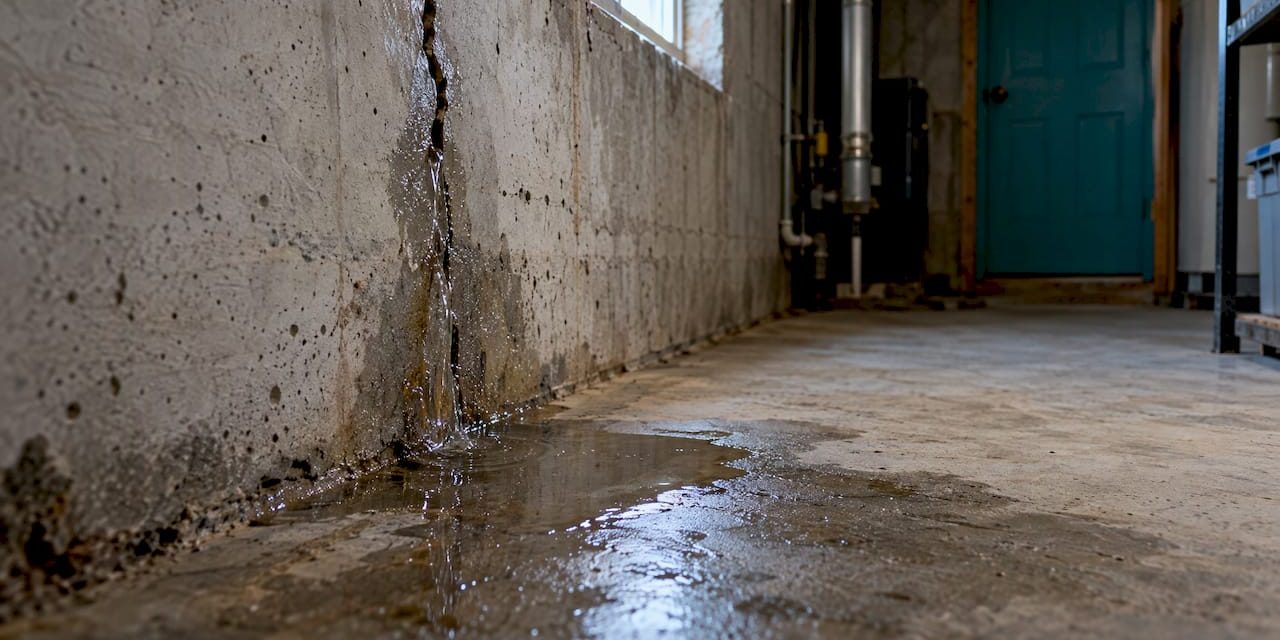
- Cracks in the wall. Rain, ice and snowmelt can seep through foundation cracks, and Canada.ca notes that a high groundwater level can make those cracks leak groundwater into the home.
- Cold joints and the wall-floor joint. These are construction seams where concrete placed at different times meets. They are weak points when the drainage outside is not working.
- Penetrations. Pipes, conduits and sleeves through the wall need sealing that lasts.
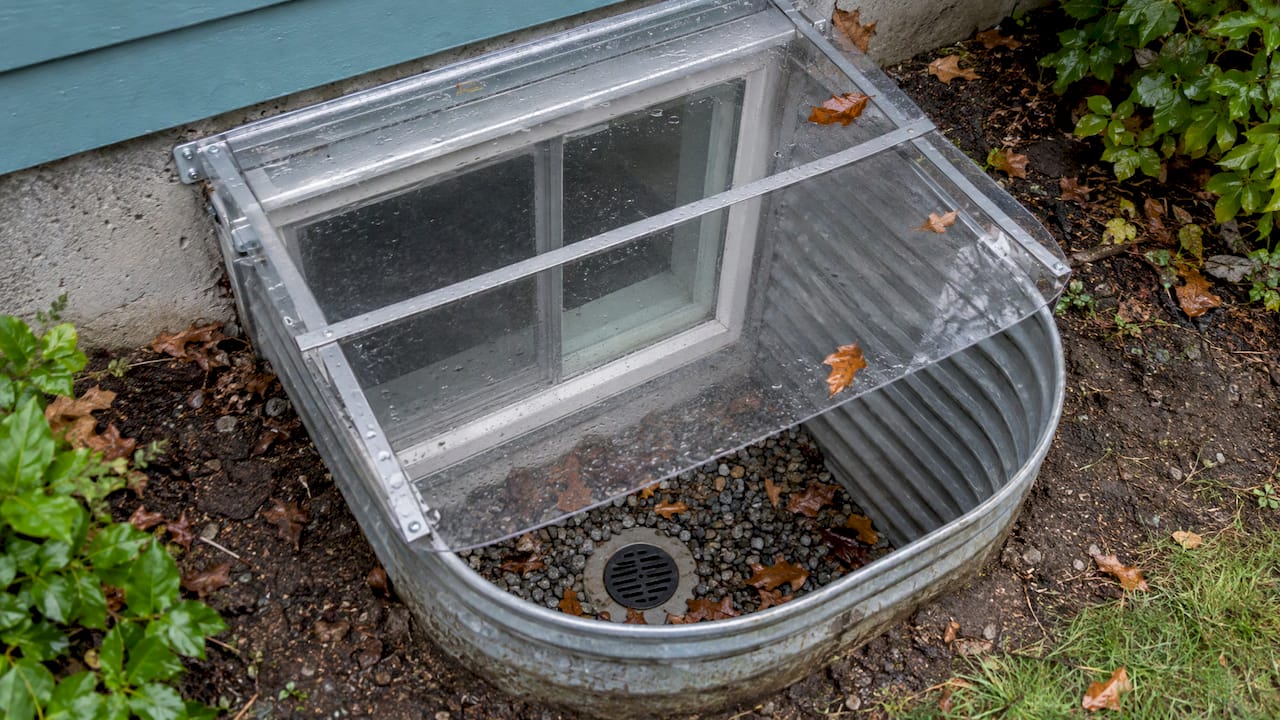
- Window wells. Poorly drained wells fill up and pass water to the wall-footing junction.
- The slab. Groundwater pressure beneath the slab, blocked perimeter or under-slab drainage, slab cracks and an unsealed wall-floor joint can all force water upward, according to the BC Housing guide.
Why depth and weather matter in BC
The same BC Housing guide warns that deeper finished basements are more likely to sit near or below the groundwater table. It also notes that climate change, with more intense, frequent and longer storms, raises the importance of effective drainage. For a builder on the South Coast or Vancouver Island, that means designing for wet seasons that are heavier than a house built decades ago had to handle.
Fix the water outside first
NRCan describes a layered approach. Site grading and drainage are the first defence, foundation drainage and below-grade moisture protection the second, redundancy such as reliable window-well and sump arrangements adds protection, and indoor-moisture control is the final step. Most leaks are cheapest to stop at the first layer.

Grading
CMHC’s Foundations publication recommends a 10% slope away from the first 2 m of foundation, rather than relying only on a 2% slope that settlement may erase. If soil has settled against the wall, add compacted fill and re-slope it so water runs away.

Eavestroughs and downspouts
The same CMHC publication recommends installing eavestroughing and directing rainwater leaders away from walls with splashblocks. Clean the troughs in fall, check that joints do not leak, and make sure every downspout discharges well clear of the foundation.
Window wells
CMHC also recommends directing window-well drains away from the wall-footing junction. NRCan adds that window wells should be designed for adverse weather. A cover helps keep rain out, but the drain must work.
Perimeter drainage and sumps
NRCan recommends providing an effective perimeter drainage layer, and sizing and locating sumps and pumps to control groundwater across the whole basement area. Test the sump before the wet season, confirm the discharge line runs away from the house, and consider a backup power or backup pump arrangement where outages are common.
Repairing cracks and leaking joints
The repair has to match the source. Sealing a crack from inside will not fix a roof-water problem outside, and it can move the water elsewhere.
For minor cracks, Canada.ca advises cleaning and drying the crack, then:
- caulking or hydraulic cement for hairline cracks;
- epoxy filler for larger cracks under 5 mm;
- a waterproofing sealant over the repair.
The Concrete Foundations Association’s technical note on waterproofing, drainage and maintenance describes three wider approaches: crack injection, interior water-remediation barriers that drain to a sump, and exterior excavation with a waterproofing membrane. It recommends a wall-repair specialist for epoxy injection.
When to bring in a professional
Canada.ca advises a professional assessment when a crack is growing, forms a large network, or lets water through. It also advises professional help when you cannot find the source of a suspected leak, and says to check local permit and inspection rules before work. BC Housing adds a practical warning: diagnosis and remediation can be difficult and expensive because repairs may be invasive and access is limited.
For structural concerns, such as displacement, bowing or widening cracks, involve a qualified engineer and keep records.
What it costs
Costs vary with depth, length, access and soil. The Intact Centre on Climate Adaptation publishes estimated cost ranges for residential flood-risk reduction in Canada. These are its 2024 estimates:
| Work | Estimated range |
|---|---|
| Eavestrough cleaning | $100 to $200 |
| Downspout extension (each) | $25 to $50 |
| Polyurethane inserts in cracks under 1/4 inch | $50 to $100 |
| Urethane injection in larger cracks | $500 to $2,000 |
| Excavation and repair of larger cracks | $1,000 to $2,000 and up, depending on depth and area |
The pattern is clear: the exterior basics cost hundreds, while excavation costs thousands. The Intact Centre also advises confirming any subsidy or insurance-discount eligibility with your local authority and insurer before you commit to a project.
Preventing leaks on a new build or renovation
If you build or renovate residential projects in BC, most leak calls are avoidable at the design and construction stage.
- Set grade early and protect it. Final grading should survive backfill settlement. Plan for the steeper slope near the wall.
- Detail drainage as a system. Perimeter drainage, drainage layer, sump, window wells and discharge points all have to work together.
- Seal penetrations and joints during construction. Retrofits behind finished walls are the invasive repairs BC Housing warns about.
- Allow for the water table. The deeper the finished basement, the more groundwater pressure to plan for.
- Hand over maintenance instructions. Inadequate maintenance is one of the three causes BC Housing names. Give owners a seasonal checklist for eavestroughs, downspouts, window wells and the sump.
- Document what you did. Photos of drainage and membrane installation before backfill make any later diagnosis faster.
Our perspective
Foundation leaks are rarely a single-cause problem. In our experience of how residential builders talk about callbacks, the expensive ones start as small decisions made early: a grade that settles, a detail that nobody owns, a maintenance step the owner was never told about.
That is why we think building science knowledge pays for itself. A builder who understands how water, vapour and drainage move around a house can spot the weak point on site, explain it to a client and price the right fix instead of the fastest one.
Our courses are approved by BC Housing for CPD credits, and they are designed to be practical. You complete them online at your own pace, with no final exam, and our support team is available seven days a week. If you are renewing your licence anyway, choose topics that make your next project safer, better priced and easier to defend.
Jesse
Build your knowledge and earn CPD credits
If leak callbacks are part of your work, our Residential Building Science for Contractors course is one place to start. Our courses are approved by BC Housing for CPD credits. They run fully online, with no final exams and lifetime access, and each course is $29 CAD one-off.

Beyond building science, you can pair it with Risk Management and Contingency Planning or Estimating, Bidding & Procurement, which help you budget for the unexpected. See the full list on our online courses for contractors page.
FAQ
What should I do if my foundation is leaking?
First make sure the area is electrically safe, then limit the water coming in by clearing eavestroughs, extending downspouts and checking grade. Photograph the leak and note when it happens. If the source is not obvious, or a crack is growing or seeping, have it assessed by a professional.
How can I tell a foundation leak from a plumbing leak?
Watch the timing. Water that appears with rain or snowmelt points to surface or groundwater entering through a crack, joint or window well. Water that appears in dry weather points to plumbing, a sump failure or a sewer backup, all of which NRCan lists as separate basement-moisture sources.
What could cause water to come up through a basement floor?
BC Housing’s guide points to a high or fluctuating water table, groundwater pressure under the slab, blocked perimeter or under-slab drainage, slab cracks and an unsealed wall-floor joint. A failed sump pump or sewer backup can also put water on the floor.
Can I repair a foundation crack myself?
Hairline cracks can be cleaned, dried and sealed with caulking or hydraulic cement, and cracks under 5 mm with epoxy filler, following Canada.ca guidance. Cracks that grow, spread or let water through need a professional, and you should check local permit and inspection rules first.
How much does it cost to stop a foundation leak?
Intact Centre estimates range from $100 to $200 for eavestrough cleaning up to $1,000 to $2,000 and more for excavation and repair of larger cracks. The final price depends on depth, area and access.
Sources
- Construction Technology Update Number 69, NRCan
- Builder Guide to Site and Foundation Drainage, BC Housing
- Foundation maintenance, Canada.ca
- Foundations, CMHC
- Waterproofing, Drainage and Maintenance, Concrete Foundations Association
- Estimated Cost Ranges for Completing Residential Flood Risk Reduction Projects, Intact Centre
- What To Do If Your Basement Floods, Make It Right