Jobsite safety compliance in British Columbia comes down to three things you can show on paper: a working health and safety program, supervisors who are competent and present, and records proving you acted on what you found. Employers carry the legal duty under WorkSafeBC rules, and residential builders often hold that duty as prime contractor. This guide sets out what the rules require, what changed recently, and how to keep your own and your supervisors’ knowledge current. Our approved safety and risk course, Construction Safety and Risk Management, is an online self-paced video course approved by BC Housing for CPD credits.
TL;DR
- Employers must run an OHS program, train and supervise workers, inspect the workplace, fix reported problems and report serious incidents to WorkSafeBC.
- On a site with several employers, the prime contractor or owner must coordinate safety, appoint a qualified coordinator and provide a site drawing.
- Recent BC changes cover emergency planning for hazardous substances, mobile equipment seat belts, headgear and respirator standards, and washrooms on larger sites.
- Written records of training, inspections and corrective actions are your evidence of due diligence.
- Safety and supervision learning counts toward the knowledge BC Housing expects from builders, and it can be done online at your own pace.
Table of Contents
- Who is responsible on a residential jobsite
- What the OHS Regulation expects on a BC site
- Rules that changed recently
- Where residential builders get fined
- What a supervisor must actually do
- Documenting safety so it holds up
- A practical routine for site safety compliance
- Fitting safety learning into your CPD
- Start with the safety course
- FAQ
- Sources
Who is responsible on a residential jobsite
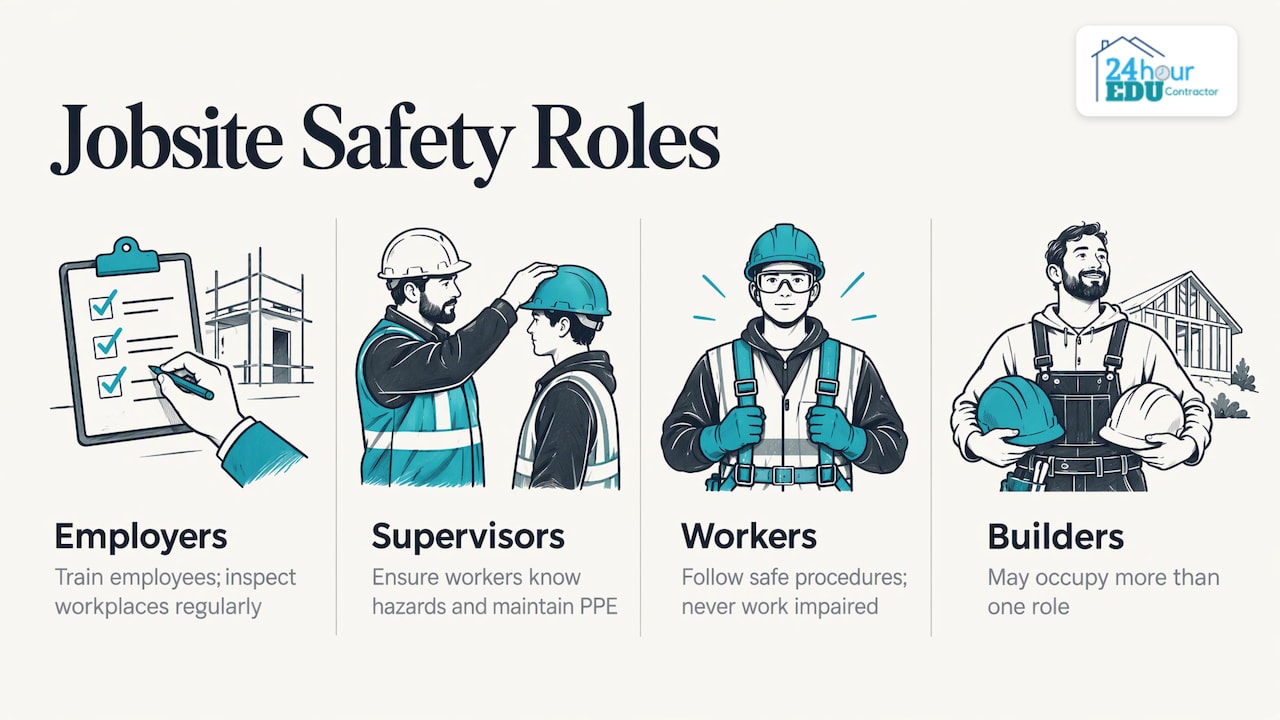
British Columbia splits safety duties between three groups, and a builder often sits in more than one.
Employers. WorkSafeBC states that employers must establish and maintain an OHS program, train employees, provide proper supervision, ensure first aid equipment and trained attendants, inspect the workplace regularly, fix reported problems, and notify WorkSafeBC immediately of serious injuries, deaths or specified incidents.
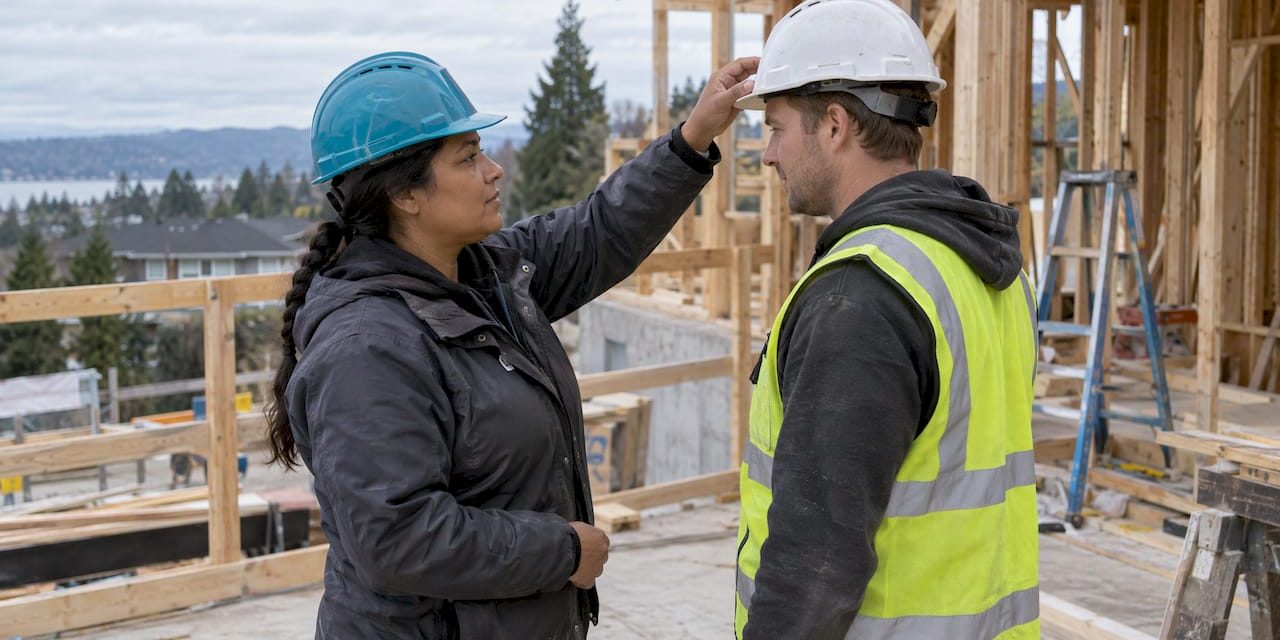
Supervisors. WorkSafeBC treats anyone who instructs, directs and controls workers as a supervisor. That person must ensure the health and safety of the workers under their supervision, know and meet the applicable requirements, make sure workers know all hazards, and make sure personal protective equipment (PPE) is appropriate and maintained.
Workers. Workers must watch for hazards, follow safe work procedures, never work under the influence, use protective clothing and equipment correctly, and cooperate with safety committees and officers.
Two points matter for residential work. First, WorkSafeBC’s residential construction manual says prime contractors, contractors and subcontractors may all be recognized as employers, and that if a contractor is not registered, WorkSafeBC may consider the homeowner an employer. Second, the same manual stresses that effective supervision is a key to health and safety on construction sites, and that it does not replace the Occupational Health and Safety (OHS) Regulation, which you must consult for your legal responsibilities.
What the OHS Regulation expects on a BC site
The Regulation is the document inspectors work from. WorkSafeBC’s construction regulatory overview (current as of 1 October 2024) lists the general worksite requirements that most often apply to a residential builder:
| Requirement | What it means on site | Regulation reference |
|---|---|---|
| OHS program | A program suited to your work and risks | OHSR 3.1 to 3.3 |
| Orientations | Young and new workers are oriented before they start | OHSR 3.23 |
| Inspections | Regular workplace inspections | OHSR 3.5 |
| Safety meetings | Regular meetings, such as toolbox talks | OHSR 3.2 |
| Bullying and harassment | A policy, with training | WorkSafeBC overview |
| Working alone | Written procedures where someone works alone | WorkSafeBC overview |
| Washrooms | Flush toilets where 25 or more workers are present at any time | OHSR 4.85, 20.3.2 |
How formal the program must be depends on size and risk. OHS Canada Magazine reports that BC expects every employer to have a program, with a formal one required at 20 or more workers in a moderate- or high-risk workplace, or at 50 or more workers at any risk level. If you work in other provinces, note that thresholds and rules differ: Canada has 14 sets of workplace safety laws, one per province and territory plus a federal set.
Multiple-employer sites
A new home or renovation usually has framers, electricians, roofers and others on site together. For these workplaces the same WorkSafeBC overview requires the prime contractor or owner to:
- Establish a coordination system for the multiple-employer workplace.
- Appoint a qualified coordinator.
- Provide a site drawing showing project layout, first aid location, emergency transportation and the evacuation marshalling station.
- Have a set of construction procedures that protect worker health and safety.
These duties sit under the Workers Compensation Act (section 24-25) and OHSR 20.3. If you act as prime contractor, you cannot leave them to your subcontractors.
Rules that changed recently
Safety requirements move. WorkSafeBC’s OHS Regulation update log shows these recent amendments:
- 3 February 2025: emergency planning for hazardous substances (Part 5, sections 5.97 to 5.104), including training and drills.
- 31 March 2025: three-point seat belts on mobile equipment (Part 16).
- 1 April 2026: respirator and safety headgear standards.
- 6 November 2026: respirator face seal, fit test and user seal check requirements (Part 8, B.C. Reg. 135/2026).
On larger sites, amendments effective 1 October 2024 require flush toilets for sites with 25 or more workers, handwashing facilities in or near the toilet space, and washrooms that are kept in working order and cleaned and sanitized regularly. Maintenance and cleaning records must be kept for at least 30 days, and at multiple-employer workplaces the duties also apply to the prime contractor.
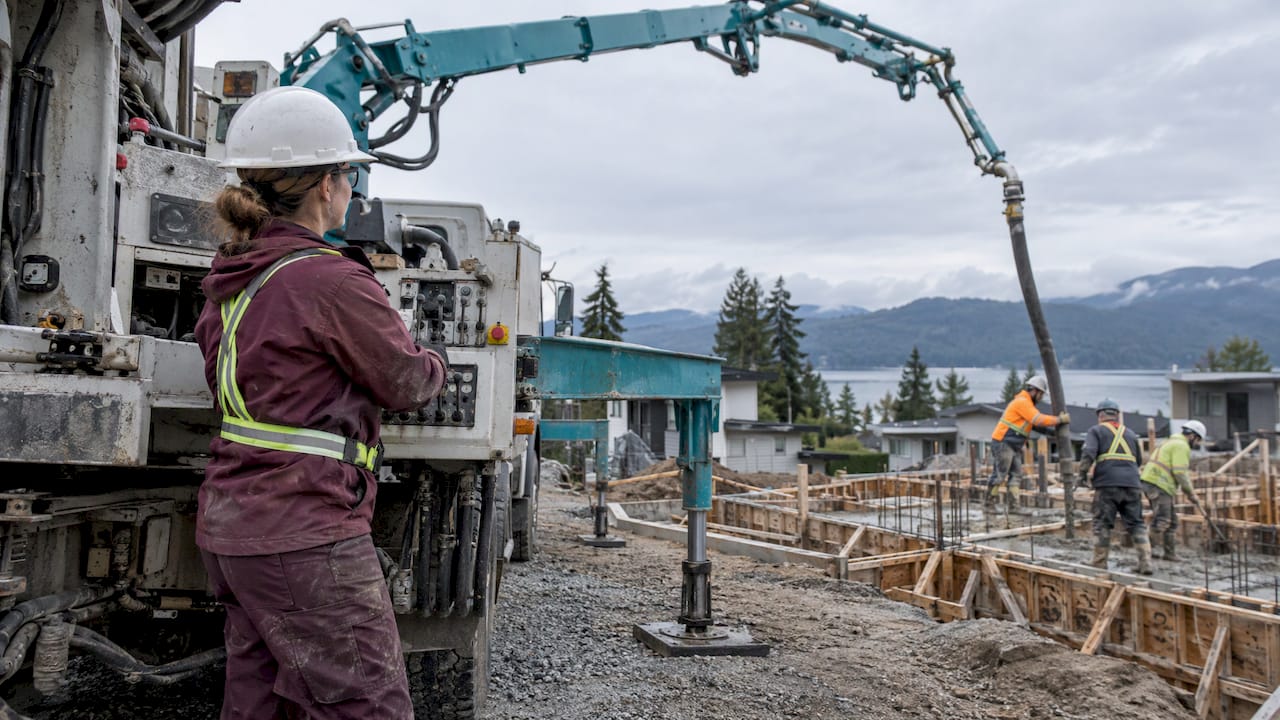
Concrete work has its own competency rule. The OHS Regulation requires employers to ensure that anyone operating or supervising a concrete pump or placing boom can do so competently and safely, and since 1 January 2024 the operator must hold a valid concrete pump operator’s certificate or work under the supervision of a certificate holder.
The Regulation is amended several times a year. Check the WorkSafeBC update log each quarter, and brief your supervisors when a change touches your trades.
Where residential builders get fined
The hazards behind most penalties are not obscure. In an August 2026 report on Fraser Valley fines, WorkSafeBC’s media representative said construction remains one of B.C.’s highest-risk sectors, with falls from heights and workers struck by mobile equipment among the most serious injuries, hazards preventable through planning, supervision, training and safety controls. The same report lists the following penalties:
| Company | Penalty | Issue |
|---|---|---|
| Langley Roofing Co. Ltd. | $19,232.06 | Failing to comply with a stop-work order over missing fall protection on a roof replacement |
| Bassi & Sons Construction Ltd. | $2,500 | No guardrails protecting workers from falling into an excavated basement |
| Popular Stucco Wiring Ltd. | $2,500 | Worker on a sloped roof without fall protection at a 3.4-metre fall height |
| Uppal Plastering & Stucco Ltd. | $2,559.91 | Improperly set up scaffolding on a three-storey home |
Every one of these is a supervision and planning failure before it is a worker mistake. A supervisor who walks the site before work starts, checks edges, excavations and scaffolds, and stops work when protection is missing prevents most of them.
What a supervisor must actually do
In the field, “supervisor” is a role, not a job title. If you direct a crew, you are one. The Canadian Centre for Occupational Health and Safety (CCOHS) explains that supervisors need more than the basic competence of a worker because they act for the employer with authority over work and workers. Their duties include:
- Directing or organizing the work.
- Informing workers of actual or potential dangers and the laws that apply.
- Showing workers how to work safely, through training, written instructions and correcting performance.
- Responding to worker concerns.
- Ensuring compliance with the Acts and regulations, and use of required protective equipment.
- Taking every precaution reasonable in the circumstances to protect workers.
CCOHS defines a competent person as someone qualified through knowledge, training and experience who knows the job’s hazards and how to recognize, evaluate and control them, and who knows the applicable laws. Competency is a combination, not a single certificate. That is why a supervisor who has years on the tools still benefits from structured learning on the regulatory side.
Supervision and your builder licence
BC Housing links safety to licensing. Its core competency requirements for new residential builder licence applicants include Construction Management and Supervision, which covers project planning and scheduling, organizing project supervision, and identifying and implementing site work safety under the OHS Regulation, WHMIS regulations and WorkSafeBC standards, including a site-specific safety plan. If you want a refresher on how licensing and continuing education fit together, see our overview of British Columbia residential builder licensing requirements.
For wider industry recognition, the Canadian Construction Association’s Gold Seal program is one route. Its application guide requires 100 credits to write the exam, including at least 50 experience credits and 25 education and training credits. Forepersons, project managers and superintendents can claim up to 10 optional safety training credits, and safety training of at least three hours is automatically Gold Seal accredited.
Documenting safety so it holds up
A program that exists only in people’s heads will not help you after an incident or inspection. A professional toolkit on health and safety from the Prospectors & Developers Association of Canada explains that written records are the evidence a company provides to show due diligence. Its list translates well to a residential builder:
- Safety induction records for each worker.
- Training records showing date, attendees and topics (such as WHMIS, fall protection and first aid).
- Safety meeting records, including toolbox talks, with attendees and topics.
- Inspection reports with corrective actions and follow-up.
- Equipment use and maintenance logs.
- Records of safety infractions and how they were handled.
- Emergency plan tests and drills.
- Accident and near-miss statistics.
The toolkit suggests rating corrective actions by severity: A for immediate, B as soon as possible, C without delay, and verifying the fix with a spot inspection. A simple three-column habit works on a small crew: what was found, who fixes it by when, and who confirmed it.
For the business side of record keeping, our guide to professional recordkeeping for BC residential builders covers filing and retention, and our page on construction business compliance in BC sets out what builders must cover more broadly.
A practical routine for site safety compliance
Use this sequence on every project. Each step is short, and together they produce the evidence described above.
- Plan before mobilizing. Identify hazards for each phase (excavation, framing, roofing, finishing) and write a site-specific safety plan. Fall protection and mobile equipment deserve first attention.
- Appoint and confirm roles. Name who supervises each trade, and, on multiple-employer sites, who coordinates. Confirm that subcontractors are registered with WorkSafeBC and understand the site rules.
- Orient every new worker. Cover hazards, emergency procedures, first aid location and who to report to. Record it.
- Hold regular safety meetings. Short toolbox talks tied to the day’s work, with attendance noted.
- Inspect regularly. Walk the site, log findings and assign corrections with dates.
- Respond to concerns and incidents. Fix reported problems, and notify WorkSafeBC immediately of serious injuries, deaths or specified incidents.
- Review rule changes. Update procedures and brief the crew when the Regulation changes.
The weak point on most small residential crews is step 1 and step 7: planning and staying current. Both are learning problems, not equipment problems.
Fitting safety learning into your CPD
Builders are busy, and training that requires a fixed classroom date often loses to a deadline on site. A flexible format solves that. Our courses are online self-paced video courses, so you can work through a lesson in the evening, pause, and return. Course access is lifetime, there is no final exam, and live customer support is available seven days a week.
For jobsite safety and supervision, these courses fit most directly:
- Construction Safety and Risk Management: the core safety course.
- Risk Management and Contingency Planning: planning for what can go wrong on a project.
- Construction Scheduling and Timeline Management: sequencing work so trades do not collide on site.
- Professional Conduct and Ethics for General Contractors: responsibilities that sit alongside safety.
All of our courses are approved by BC Housing for CPD credits and cost $29 each as a one-off purchase.
Our view: safety is a supervision skill
We write courses for licensed residential builders, and the pattern in the regulations is plain: the duties land on the person who plans and directs the work. WorkSafeBC itself describes supervision, planning and training as the controls that prevent the most serious injuries. That is why we think safety learning belongs in a builder’s regular professional development rather than as a once-a-career event.
Our courses are built to be practical and relevant to real BC residential work. They are online, self-paced video courses with no final exam, so the time you spend goes into understanding the material and applying it to your own sites. Clear course information is shown upfront, and our support team is available seven days a week if you have a question.
A builder who has worked through safety, risk and scheduling content is better placed to write a site-specific safety plan, brief a crew and explain decisions to a client or an inspector. We designed our catalogue around that connection.
Chuck Pulaski
Start with the safety course
If you want to cover the safety side of your CPD this year, begin with Construction Safety and Risk Management. It is one of ten BC Housing approved courses on our site, each $29, delivered as online self-paced video lessons you can finish around your work schedule. See the full list on our online courses for contractors page.
If you manage a team, you can assign the same course to your supervisors so everyone works from the same understanding of hazards, roles and records.
FAQ
Who is responsible for safety on a residential construction site in BC?
Employers carry the main legal duty, but supervisors and workers each have their own duties too. A prime contractor or owner must coordinate safety where several employers work on the same site. If a contractor is not registered, WorkSafeBC may consider the homeowner an employer.
Do I need a written safety program?
WorkSafeBC expects every employer to have an OHS program. A formal written program is required at 20 or more workers in a moderate- or high-risk workplace, or 50 or more workers at any risk level. Smaller crews still need to train, supervise and inspect, and written records make that easy to prove.
What records should I keep?
Keep worker orientations, training records, safety meeting notes, inspection reports with corrective actions, equipment logs and incident records. On larger sites, washroom cleaning and maintenance records must be kept for at least 30 days. Records are your evidence of due diligence if WorkSafeBC reviews your site.
What qualifies someone to supervise a site?
Canadian law looks for competence: knowledge, training and experience, plus knowledge of the hazards and the applicable laws. Job Bank notes that construction site supervisors usually need secondary school completion and several years of experience in the trade or supervised work area. Ongoing training keeps that competence current.
Are your courses approved for CPD?
Our courses are approved by BC Housing for CPD credits. They are delivered fully online as self-paced video courses, with no final exam and lifetime access.
Sources
- Roles, rights and responsibilities, WorkSafeBC
- Safe Work Practices in Residential Construction, WorkSafeBC
- Construction projects: Overview of regulatory requirements, WorkSafeBC
- One country, 14 rulebooks: Working safely across Canada, OHS Canada Magazine
- OHS Regulation update log, WorkSafeBC
- Washroom facilities at construction sites, WorkSafeBC
- Occupational Health and Safety Regulation, BC Laws
- WorkSafeBC announces fines for Fraser Valley construction companies, The Progress
- Health and Safety Legislation in Canada: Competent, CCOHS
- Core Competency Requirements, BC Housing
- Gold Seal Certification application guide, Canadian Construction Association
- Gold Seal training credits, Canadian Construction Association
- Health and Safety toolkit, PDAC
- Construction Site Supervisor in Canada, Job Bank